

I remember the first time I posted on Facebook on my business page in 2015 and how I felt after I clicked the share button.
Sick, self-conscious, embarrassed, terrified, like everyone was going to stop what they were doing and say ‘Who does she think she is?’ or ‘What on earth is she doing?’
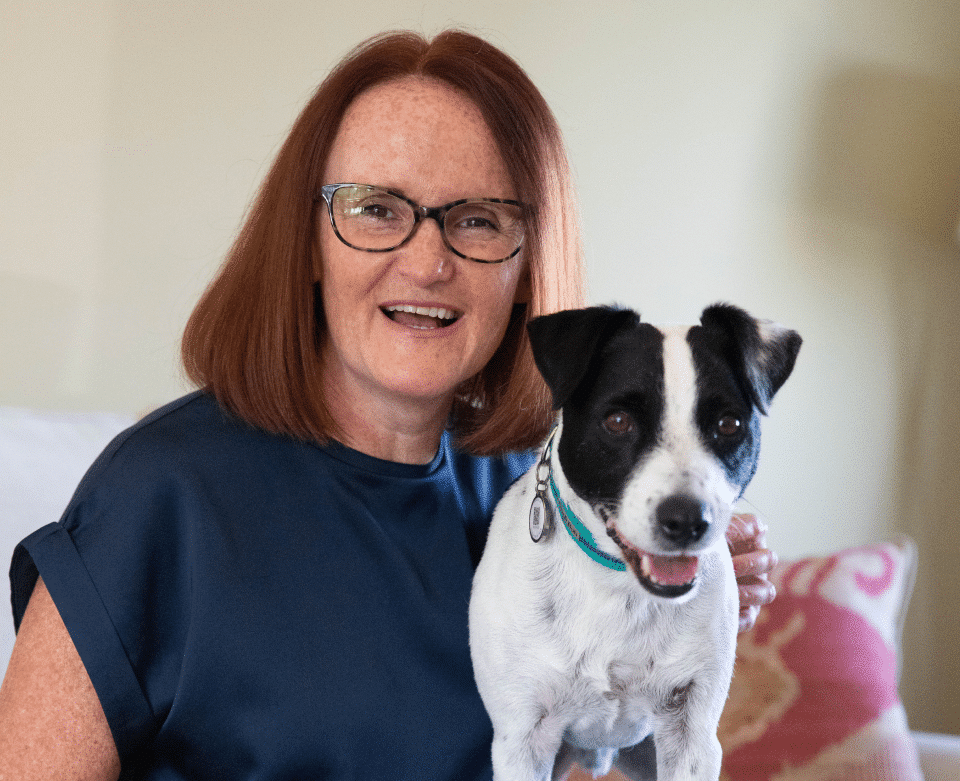
This is the photo I used for my first post 10 years ago, and I kept going back to my laptop to check if anyone had shared their outrage or posted something nasty.

When really, no-one cared, the world didn’t stop spinning and everyone just got on with whatever they were doing before I put my ‘Do you need a press release?’ post.
Putting your head above the parapet and talking about your business is scary and a lot of emotions come up when you first do this, and they carry on.
Even over ten years after sharing that first-ever update, I still have the same feelings sometimes.
And it’s why it can be helpful to work on the emotions as well as the ‘how to use TikTok’ or the content strategy or understanding the tech or the tactics or the platform.
In this post, I’m exploring how our emotions can be linked to the struggles we have when it comes to being visible, and how coaching can help.
What visibility is
When you run a business, you have so many hats to wear, but one of the most important things you need to do is help people know who you are, what you do, and how you can help them.
As I’m writing this in 2026, there are so many ways to be visible, and choosing what to do can feel really overwhelming.
Visibility can mean going to networking events, social media, website content, newsletters, talking on stages, business cards, and being in the press.
Ultimately, it’s about getting your name and your business seen by the people who need what you’ve got to offer.
The Cambridge dictionary definition of visibility is, “The degree to which something is seen by the public,” and also, “The degree to which something is seen or known about.”
We know people need to see us, and we know people need to know about us.
Why people find it hard
There are so many reasons, but the main one is this: unless you have a previous career in marketing, PR, or social media, this is something you’re expected to do with little or no training.
And being visible is vulnerable, isn’t it? You are putting your head above the parapet and saying, ‘This is me, this is what I do, do you want to buy from me or work with me?’
Putting yourself out there is hard enough, and then figuring out the different tools, tactics, platforms, and strategies adds another layer of difficulty.
Plus, you didn’t become a dog trainer or a cat groomer or a pet product maker because you wanted to be on TikTok or write newsletters.
You did it because you wanted to train dogs, groom cats, or make your product. Visibility is an extra thing you have to do, and it can feel like a full-time job in itself.
What people do when they find it hard
These are the common responses I see with the clients I work with, and I’ve supported thousands of people over the years when it comes to being visible.
When they find it hard, they beat themselves up for finding it hard. They feel unconfident. They look around and compare themselves to others and think, ‘Why does everyone else find this so easy?’
They feel overwhelmed, and sometimes experience analysis paralysis – thinking about all the things they could do and ending up doing nothing.
And then they feel bad about asking for help, as they should already know what to do which isn’t true or fair.
Some people go quiet and pull back from social media, stop sending newsletters, and tell themselves they’ll start again when they feel ready.
And ready never comes, because the feelings that made it hard in the first place are still there.
Others stay busy doing everything except the visible stuff.
They fiddle around with their website for the hundredth time, reorganise their Canva folders, and research the best time to post.
It feels productive, but it’s a way of avoiding the thing that feels scary.
And some people push through and do it anyway, but hate every minute of it, because they’re doing it from a place of dread rather than confidence, which means it never feels good or becomes sustainable.
What all of these responses have in common is that they’re emotional, not practical.
And that’s why practical advice alone – post three times a week, use these hashtags, try this format – only gets people so far.

What’s the impact of not being visible?
When visibility feels too hard and nothing happens, the ripple effect can be significant. Customers can’t find you.
You feel frustrated. You get stuck, or feel left behind, because you can’t make the sales you need to grow.
Self-doubt kicks in. You start questioning whether you can do this at all – even though you absolutely can do the thing, it’s the visibility that’s the block.
Remember: people go to university and study marketing, PR, and communications for three years.
You’re expected to just get on with it. So let’s be a bit kind to ourselves when it comes to this.
How is this linked to your emotions?
If you look back at the language used in this blog post so far – why people find visibility hard, what they do, and what the impact is – you’ll notice something.
Fear, overwhelm, self-doubt, lack of confidence, and frustration are all emotions.
And by working on the emotion that’s keeping you stuck, you can figure out your way forward.
Let’s take imposter syndrome as an example.
You might be highly qualified as a pet professional, but you feel like an imposter.
The emotion underneath that might be fear – fear of being found out, fear of not being good enough, fear of being challenged by other pet professionals if you put your offers out there.
If we were working on this together, some of the questions I might ask you are:
What impact is fear having on you?
What impact is it having on the situation, the situation being that you don’t want to put your business out there because of the fear of feeling like an imposter?
What beliefs do you have about that fear, and what do you notice about those beliefs?
What would you need to believe about fear to experience it differently?
And if you could experience fear in a more positive way, what impact might that have?
Can you see how looking at the emotion underneath – really unpicking it – can help you move forward?

How working on your emotions helps you move forward
In coaching, there are traditionally three areas people work on: their goals, their values, and their beliefs.
As an Emotions Coaching practitioner, I work on the principle that emotions are the fourth pillar, because they are linked to all three.
Values are what we stand for – the things that matter most to us. When our values feel threatened or unmet, we feel it emotionally, and that’s worth paying attention to.
If you have a value around security, and something happens in your industry, for example, the training provider you learned with being involved in a scandal, that triggers a feeling of insecurity and you may want to explore this.
When it comes to beliefs – the rules we live by – these are linked to emotions too.
You might have a limiting belief that you’re not good enough. The emotion linked to that might be sadness, or a lack of confidence.
If you challenge that belief and work on the emotions causing it, that can help you move forward.
And beliefs can change – we all stopped believing in Santa Claus and the Tooth Fairy at some point.
With goals, these are the things you want to achieve, that are important to you.
So let’s say you’ve set a goal to grow your business but you’re finding you’re being ignored by people in the industry.
Being ignored is getting in the way of your goal and leaving you feeling frustrated.
If we work on that frustration together, the solutions might involve being more visible and sharing your story.
Doing that helps people take notice, takes away that feeling of being ignored, and helps you feel more confident because you’re being seen and heard, so you start to move forward.
Why I’m training as an Emotions Coach
I’m studying to become an Emotions Coaching Practitioner for 2026 with Zoe Hawkins and Jo Wheatley from In Good Company.
They’re a coaching training provider who also run The Coaching Crowd podcast.
I started the course because I wanted to learn more about emotions for myself, but I know it’s going to be of huge value for my clients too.
We feel different emotions in every hour of every day, and they impact on how we are in our businesses.
I’ve never met a pet business owner who says they don’t experience imposter syndrome, or who has never compared themselves to others, or who has never felt overwhelmed.
The same is true of comparison, feeling stuck, or that voice that tells you you’re not good enough.
These don’t sound like emotions when you’re in the thick of them, but they’re all rooted in how you’re feeling – and once you understand that, you can do something about it.
What I’ve realised during this training is that Emotions Coaching isn’t some fluffy, nice-to-have thing. It’s fundamental to helping people move forward in their businesses and their lives.
I’m currently working with ten coachees to develop my skills, and I’ll be qualified by the end of 2026.
How you can work with me
If you’re reading this and nodding along and thinking this is the kind of support you’d like, there are two ways to work with me.
You can work with me longer term as a coaching client – my packages are for six months and you can apply here.
Or if you know specifically where you’re stuck and you’d like to explore it, you can book a 60-minute one-to-one here.
You’ll be asked to fill out a short form and do a bit of preparation ahead of the session, so we get the most out of our time together.
Related articles/podcasts
Emotions coaching and how it can help you and your pet business
Why I am an accredited pet business coach
The confidence experiment and how you can feel more brave
How to choose the right pet business coach
The rollercoaster of running your own business
Could imposter syndrome be your friend with Nicola Kinnard Comedie