

Would you like to improve your understanding of neurodivergence?
It might be in relation to your own experience, or around how you support your clients.
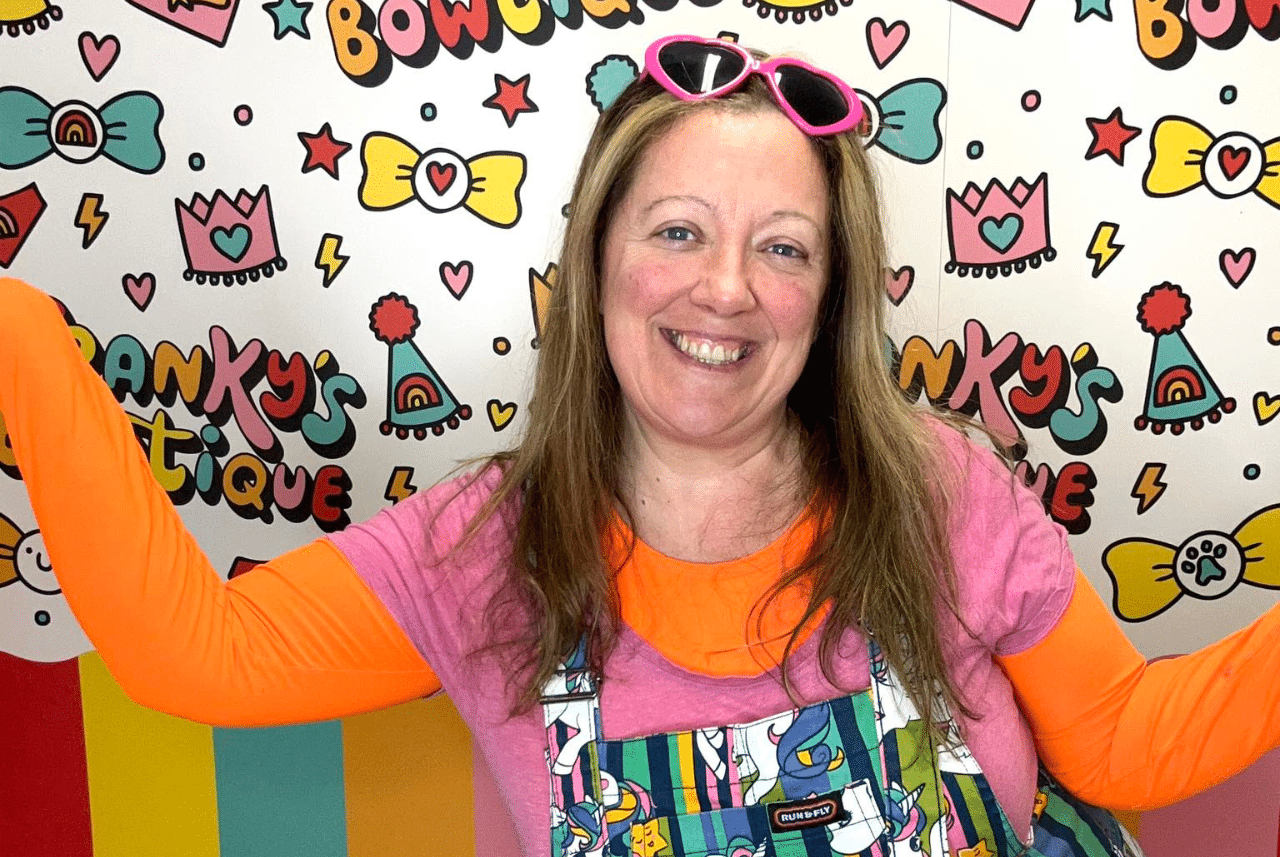
Katrina Bayliss is The Neurodivergent Dog Coach and she supports pet professionals and dog people in improving the way they communicate with their dogs and one another.
Katrina has the most fascinating background, from working in nightclubs to counselling and psychology.
But it was her dog Milo and experience of anxiety that led her into the industry after discovering agility, and becoming very good at it.
She wanted to learn more about her dog, and this fascination led her to become a trainer.
Then, back in 2022, Katrina had an ADHD and later autism diagnosis herself.
It helped her put together many missing pieces of what she describes as the jigsaw of how she saw the world, her work, and also how she supported people as a pet professional.
Katrina talks about her experience and why traditional dog training and business advice often don’t work for neurodivergent people.
Katrina explains how our emotional state and unmet needs impact our dogs’ behaviour, and why making services neuro-inclusive is essential if we want to help both ends of the lead.
We also discuss social media overwhelm, whether or not you might want to get involved in things like heated Crufts debates, people-pleasing, and the pressure to be polished and perfect online.
Plus how Katrina is building community through her Neuro Inclusive Dog Hub, Dog Agility Unmasked, her podcast, and new low-cost membership for neurodivergent dog pros.
Listen in on the player link below and you can read the key points covered in a Q and A at the end of this post.
Key topics and timings:
0.20 – Episode introduction
1.45 – Sponsor message – Pet business content planner.
2.57 – How Katrina found herself in the pet industry.
5.44 – What Katrina did before starting her dog training business.
10.39 – What it’s like to understand both ends of the lead as a psychotherapist and a dog trainer.
14.04 – Making the connection between the clients who share the same approach as you.
16.02 – How Katrina’s diagnosis changed her work.
20.30 – What it was like communicating her new approach online.
44.03 – The kind of response she had from the dog training community.
28.33 – When the ‘aha’ moments happen with her clients.
34.38 – How the world has changed and people are looking for a more holistic approach.
39.14 – Taking care of your needs as a pet professional to build a more sustainable business.
41.40 – Deciding where you spend your time in person and online to take care of your wellbeing.
47.45 – Putting boundaries in place to protect you, your time and your energy.
52.59 – Why overworking sometimes leads to health problems as our bodies try to tell us to stop.
55.29 – Being mindful of making decisions from a need for acceptance and doing what you’re told you ’should’ do.
58.04 – Why Katrina made a community for neurodivergent pet owners and professionals.
1.00.01 – Katrina’s podcast and how that’s been received.
1.03.45 – The downsides of social media.
1.06.10 – The trust recession we’re in during the age of AI.
1.07.14 – Katrina’s new membership community for people looking for more support.
1.16.23 – Letting go of the need to be perfect.
1.17.00 – How to connect with Katrina.
Links mentioned in this episode:
Buy the Pet Business Content Planner here: https://rachelspencer.co.uk/shop/
Learn more about Katrina on her website: https://dogsanddivergentminds.com/about/
And listen to her podcast here: https://open.spotify.com/show/7rpgGoun9BGrtcZgoAS595
Further listening and reading:
Sasha Louise Smith on harnessing your strengths to build a business you love
Should you buy my pet business content planner?
Navigating comparisonitis as a pet pro with Kate Hoyle
Finding the right pet business community
Making a million on TikTok shop with Gemma from The Herbal Dog Co
Clayton Payne on lessons from 30 years in the pet industry
The confidence experiment and how to feel more brave
How to use the pet business content planner
How to have a pet business reset
Prefer to read rather than listen?
This is a summary of my interview with Katrina Bayliss, The Neurodivergent Dog Coach, taken directly from the podcast transcript.
How did you end up in the dog industry?
“I blame my dog, Milo, for everything. I got him over 11 years ago because I was going through what I believed to be anxiety – really bad anxiety where I couldn’t leave the house on my own.
“I wanted a dog, researched it, got a Cocker Spaniel, and then started going out more, dog walking with local people in the village, and built a little community. That upped my confidence.”
What was your background before dogs?
“I’ve had a couple of different backgrounds in different sectors. When I left school, I did business qualifications and all kind of things.
“I managed different sectors – retail, for a long while. I actually went into nightclubs and was managing and running those. I also had a craft business and a successful craft business as well.
“But then alongside that, I also trained in Counselling and Psychology, so I did a whole load of qualifications in that as well. And then along came my family and commitments, and then ended up in the dog world, really.”
When did you get your neurodivergence diagnosis?
“I received a late diagnosis about two, three years ago. My daughter put the idea in my head after a Mental Health First Aid workshop, and then I won a place at a personal business development conference about neuro diversity and inclusivity.
“And then from a dog training perspective, I got my diagnosis, and I started going down this rabbit hole.”
What did that diagnosis reveal?
“I felt a little bit isolated, a bit like something just a little bit different, basically. And all these pieces started falling into place.
“Instead of thinking ‘Oh, it’s not me that fits in,’ I realised it’s the systems and structures that have been there for donkey’s years that haven’t changed – they don’t fit with neurodivergent people.”
How did your dog Quest become a turning point?
“My young dog, Quest, he picks up on things a lot more than any of my other dogs have.
“At one competition, there were a couple of people that had given me a hard time in the past, and they were stood ringside. I saw these people, and I went to release the dog. And he froze, and he just literally wouldn’t move.
“I was like, ‘Oh, my God, this is embarrassing, isn’t it, because they’re watching me?’
“The only thing that changed when I worked on myself was everything else changed. It was my stuff that made the big difference.”
How did people start responding to your new approach?
“I started talking about it more and opening up in my free Facebook community. The more honest I was – I mean, I’ve always been honest, but I wasn’t as vulnerably honest, if that makes sense.
“The more I opened up, the more people were like, ‘Oh, me too. Me too.’
“People messaged me saying trainers had made them cry. I thought, this is barbaric. You know, people shouldn’t be treated like this, and there just isn’t that awareness about it.”
Why does the human side of the lead matter so much?
“The holistic side of the dog world is getting there now, but we need to extend that to humans. We also need to be looking at it from the lens of neurodiversity as well.
“If a neurodivergent person is in a dog training class made to feel a certain way – whether it’s how information’s delivered, the environment, or sensory issues like food, lights, or noise – that dog won’t get the right training.
“If we help the human to feel safe, seen, and supported in that training environment, they’re going to go on and train the dog successfully, so the dog is going to get more success.”
How does this show up in agility?
“Anxious agility handlers get into the ring, do a couple of jumps, then their brain forgets the rest of the course because they’re not feeling safe.
“The dog behaves differently. They don’t get results. And it’s not the dog’s fault – it’s how the human is made to feel.
“That goes right from a dog training class to a competition agility level.”
What responsibility do dog trainers have?
“If you are a dog trainer, and you’re not setting your classes up to be inclusive, or you’re not making people feel seen, safe and supported, the neurodivergent people in your class aren’t going to be the ones that say, ‘Excuse me, I’m not feeling this.’
“They’re just quietly going to scuttle away. They’re probably going to tell their neurodivergent friends or family that that’s not a place for me.
“Or they’re going to go to the internet, where we know that on the internet, it’s not always good advice.
“We have a responsibility as dog professionals to look at what we’re doing, because you won’t help the dogs you think you’ll help just by making humans feel a certain way.”
What happened with your own burnout?
“When I was training agility, I had a really successful business. I was working loads of every single night of the week. I was doing one-to-ones and group classes. The money side of it was brilliant.
“But when it’s making you feel a certain way, or when it doesn’t align with you, it’s just not worth it for me.
“When I made that decision to stop, for about three weeks, I was still a complete mess because my body didn’t know how to relax. I was so used to living in fight or flight, anxiety.
“It took three weeks to think, ‘I need to put boundaries in place. I don’t want to go back to feeling like that.'”
How do you manage social media now?
“One of the things I did is be really mindful about my Facebook feed. You can unfollow people without unfriending them.
“The algorithm works on what your eyes are on, how long you spend on content. Last week burnt me out completely – all the Crufts stuff, people moaning about course providers.
“I switched my phone off for a whole Sunday. The world isn’t going to end if you don’t do that.
“You can’t jump on every bandwagon or you’ll alienate the very people you’re trying to help.”
What have you learned about authenticity?
“The most success I’ve had – both business and social media – is when I’ve been authentically me.
“I don’t just talk about good stuff, because social media becomes a place of highlights and that feeds into people feeling inadequate. I’ve always been massively honest about my dogs’ struggles.
“A post about my nervous system needing a reset, about having had enough – those resonate most.
“People feel seen and supported and relatable. That creates real connections.
“For a lot of neurodivergent people, life’s just not polished and perfect. We struggle on a daily basis, and just doing something is better than nothing.”
Why does this matter in the world we’re in at the moment?
“We’re going through what’s called a trust recession because of the rise of AI and all these other things.
“By being authentic and putting ourselves – good and bad – out there, people relate to you more, so they trust you more. It’s not fabricated. It’s not flowery.
“Me putting out about my nervous system needing a reset doesn’t mean I’m a bad business person. It just means I’m human and I needed a bit of a break.
“If a dog trainer shares a bad day with their reactive dog honestly on the internet, their ideal client – somebody with a reactive dog – will be like, well, actually, their dog’s just done exactly the same as mine. That solidifies know, like, and trust.”
What’s next for you?
“I’ve got exciting collaborations coming up with bigger names in agility and beyond. I’m expanding my business coaching – helping dog businesses with audits from a neurodivergent perspective.
“And I’ve just launched the Neuro Inclusive Dog Professional Network membership. For the first 30 members, it’s just nine pounds a month.
“It includes monthly Rise Up webinars on topics like RSD, a growing library of resources, and community meetups.
“I’m building it with people, not waiting for perfection. I want to eventually create an online directory of neuro-inclusive professionals so neurodivergent dog people can find trainers who get them.”
How do you balance the mission with running a business?
“I built this on mission, and now I have to run it as a business. People have bills to pay.
“I still do lots of free support. I have different access levels – free, low-cost membership, online coaching, and business audits.
“The more people get involved, the more experiences I gather, and the more real change we can create in the dog world.”
Learn more about Katrina’s work at www.dogsanddivergentminds.com