

Are you considering creating an awareness day or awareness week? Here’s how to decide which one is best for you.
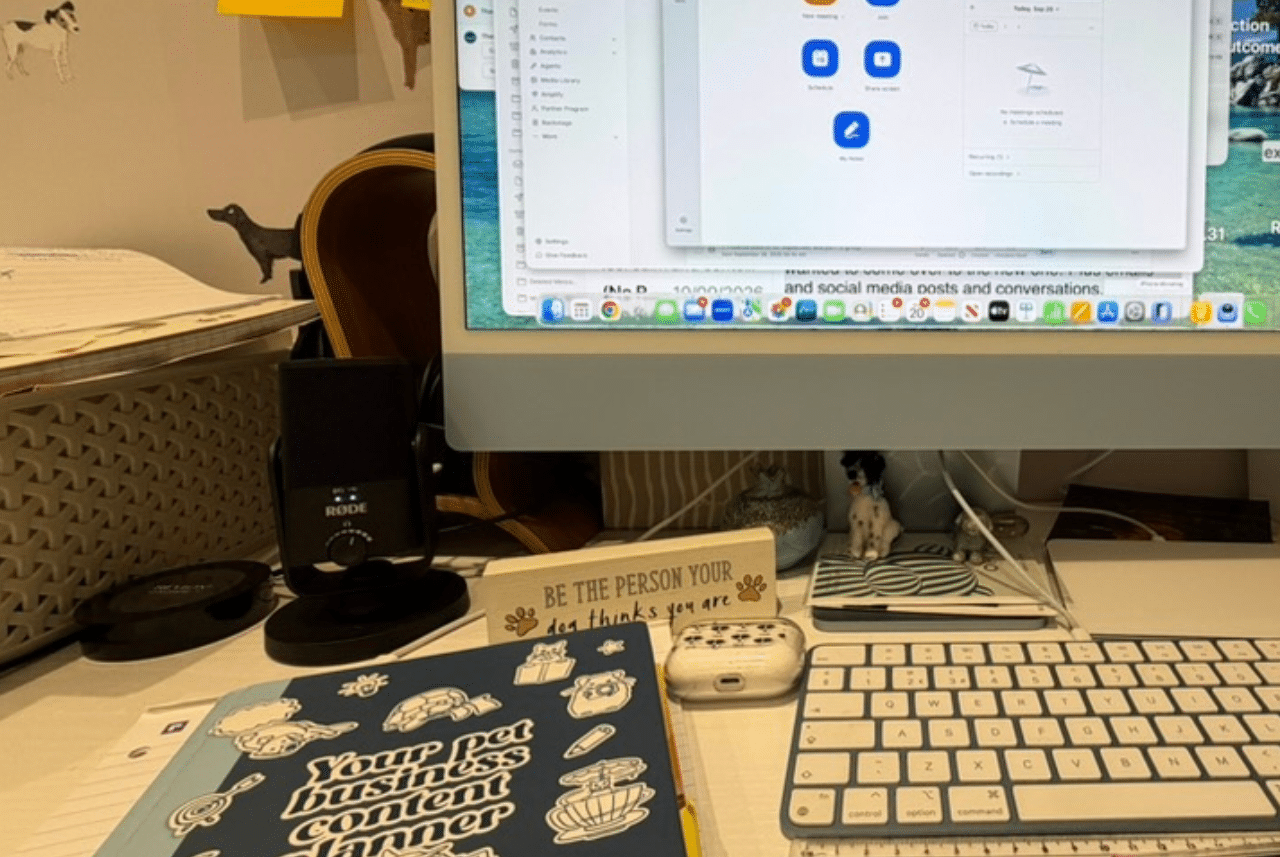
I’ve had two conversations recently while working on the 2027 Pet Business Content Planner with people setting up new awareness campaigns, and both had decided to create a week.
Both had picked the middle of September, and both were really lovely ideas behind some very important causes.
What came up in both conversations was what a week involves compared to a day, because that’s a decision that’s important, as there is a big difference.
So I wanted to create a post on this, so if you’re considering the options, you can see what’s involved in each and choose what works best for you.
What’s involved in an awareness day or week campaign
Whether you go for a day or a week, there’s a core set of things you need to think through before you launch anything.
Choosing the day itself comes first and as a journalist of nearly 30 years and a coach who has helped dozens of people with their days, this is how I’d approach this:
Pick something that feels relevant to you. Kerry Jordan, creator of National Dog Photography Day, chose 26th July as it’s Elliott Erwitt’s birthday, a famous figure in dog photography.
Check what else is already happening around your proposed date so you’re not competing with three other animal awareness days. I use https://www.daysoftheyear.com
Check on Google whether anyone’s already registered something similar.
Kirsty Everard from Kirsty’s Paws Dog Training says she spent more time researching the right day for Dog Training Appreciation Day on July 18th than she did writing her website.
The day she chose is perfect as there aren’t lots of other pet days around it, and it’s in the summer, where there are less awareness days than other times of the year.
Make it static. Not the third Thursday in July, but the 18th like Kirsty did. A day that moves depending on the calendar is a day people will get wrong.
Once you’ve got your date, you’ll want a hashtag people can get behind.
Plus a plan for telling people about it on social media in the run-up, not just on the day itself.
Then there’s the press. Think about your story ideas early. What’s the angle, why does it matter this year, who cares?
A catchy, easy-to-understand, fixed day with a good reason behind it gives a journalist something easy to write, like this story which went viral with my client Niki French about her ‘Don’t Walk Your Dog Day’ on April 2nd.
Dog trainer says you shouldn’t walk your dog every day
You’ll also need to tell your own community about it, and give them something to use.
Things to prepare:
- Pre-written posts they can copy and adapt
- Graphics and social media frames
- Email campaign copy they can drop straight in
- Collaborations with brands or partners
- A giveaway, if that fits
- A way to connect the day to a product or offer, so there’s a financial benefit to you too, not just goodwill
The sooner you have this ready, the more opportunity you’re giving people to be involved in your day.
The difference between a day and a week
A week sounds more serious than a day, like it carries more weight, more commitment, more importance, as if a single day might not be taken seriously enough.
That isn’t wrong, a week does give you more room, more angles, more chances for press coverage and community involvement.
But it also asks a lot more of you.
Think about who tends to sustain a week of awareness content well.
Breast Cancer Awareness Month in October works because there’s a huge organisation behind it, with paid staff, a press office producing new stories and different angles every single day.
They have hundreds of case studies sharing their stories, with images, videos, words, audio, they arrange runs, events like coffee mornings, it’s a huge campaign.
Parkinson’s UK can do the same. Parkinson’s Awareness Week is an annual event held every April to educate the public, support individuals living with Parkinson’s disease, and raise funds for research.
It centres around World Parkinson’s Day on April 11th, and this day was chosen because it’s the birthday of Dr James Parkinson who first discovered the condition in 1817.
If you’re a solo business owner, or a small team, that same seven days is a bigger undertaking.
It’s not that it can’t be done, plenty of people manage it, but it needs seven distinct elements to it that people can use. You’re going to be posting on social media daily, and potentially asking others to as well.
If you’ve got a clear theme for each day of the week, a week could work well for you.
If you’re struggling but you have one strong message, a single day would work perfectly well.
How much time do you have to spend on your day or week?
A single day, done well, still needs a lot of lead time. I usually start work with my clients on theirs at least three months before.
For example, in 2026, Sarah Jones from My Anxious Dog wanted to arrange a Dogs In Yellow Day walk for her day on March 20th so there was a lot of planning.
She did an amazing job and the National Trust came on board and arranged for her to have space at Cliveden House which was an absolute dream come true. Watch her video interview here.

Sarah had to consider so much.
Rallying her community to come along, making sure the environment was safe for the dogs, arranging yellow space zones, working with brands like Forthglade, Pet Remedy, Pet Trust, Furr Boost, even getting her mum Joy to knit yellow poppies for the goodie bags.
Plus inviting people, and having dog trainers like Niki French from Pup Talk, Sarah Hawkins from Barkshire Dog Training and Jules Ballard from Contented Canines.
You can read about the day here: https://www.maidenhead-advertiser.co.uk/news/events/704508/dog-owner-hosts-first-ever-walk-for-anxious-dogs-at-cliveden-estate.html
You’re building your material, briefing any collaborators, pitching to press, and prompting your community, all before the day itself arrives.
A week multiplies that. Not by seven, because some of your material can be reused and adapted, but by enough that it becomes a real project rather than a single campaign push.
If you’re running this alongside everything else in your business, can you sustain seven days of fresh content?
Do you have extra support if you go for the week option?
People who successfully run a week usually have a team behind them.
If you think you’re going to be drafting content, managing the press angles and inquiries, keeping an eye on social media, sending out material for people to use, and handling partnerships.
If it’s just you, or you and one other person, you need to plan for it properly, and know what’s happening on each of the seven days.
Each year this will be updated, because you’ll want a fresh theme or angle.
Activities and themes for the day or week
Whichever you choose, it helps to have a clear theme running through it rather than a stream of posts with the same hashtag attached.
Think about what you want people to feel, learn, or do by the end.
For example, Sarah’s theme for the first year of Dogs in Yellow Day on March 20th was ‘What if everyone knew?’
The next year she did a survey to see how attitudes had changed, and this increased awareness was her theme for that year, that people were learning and behaviour was changing.
For a single day, this might be one central activity everyone can take part in together, a photo prompt, a shared story format, a specific action you’re asking people to take.
For a week, you’ve got more scope. Each day should have its own focus, its own reason to exist, rather than repeating the same message with a different graphic.
Ways to keep your community involved and engaged throughout the week
If you do go for a week, the challenge is keeping people with you for all seven days rather than engaging on day one and drifting off by day three.
Daily prompts help, as does giving people something new to look forward to each day, whether that’s a different story, a different contributor, or a different piece of content to share.
Encouraging user-generated content, people sharing their own stories, videos and photos related to the theme, tends to keep momentum going.
And checking in with your community as the week goes on makes a real difference to whether people stay involved right through to the end.
I’d recommend having a ‘cheerleader team’ of people who are really invested in supporting you, and emailing them plenty of material before.
Throughout the week, you can email them each day to give them a nudge and see how they’re getting on, and you’ll want to go and engage with their posts and thank them for their support.

Choosing an awareness day to be part of your week
If a week does feel right for what you’re building, it’s still worth tying it to a single, static day within that week.
For example, Nina Fotara has created Canine Regulation Week, starting September 2026. This will take place on the second full week in September each year, so for 2026 that’s the 14th – 20th.
She’s also created Canine Regulation Day on the 14th September, meaning there is a fixed day in the diary people can use, year in year out.
This means the day can be used on its own by anyone who only has capacity for one post, one story, one moment, while the week gives Nina and the people in her community lots of options to talk about the topic.
It’s been really good to see some of the posts already being prepared ahead of Nina’s day from people in different parts of the industry.
A fixed date, like the 14th of September, is easy to drop into a planner and easy to remember year after year.
It also gives journalists that hook they need, and gives everyone else, the businesses who want to get behind your cause but don’t have a week’s worth of content in them, a single moment to join in.
Making your decision
I love that people are creating these days and weeks and want to raise awareness of causes that matter to them.
If you’re at the early stages of building one, both a day and a week can work brilliantly.
A day is easier to sustain on your own, easier for other people to get behind, and easier to remember year after year.
A week gives you more room to explore and more ways to keep your community involved, provided you’ve got the content, the energy, the time, and the support.
Whichever you choose, build it around a single, fixed day that never moves.
That way, however much or little capacity you or anyone else has, there’s always a moment everyone can take part in.
Finally, if you’d like support with your day, head to my coaching page to look at the options, from a six month package to a one off hour session.
Further reading/listening
How to create an awareness day with Kerry Jordan
Niki French on going viral with Don’t Walk Your Dog Day
In the Spotlight with Sarah Jones from My Anxious Dog
How to use awareness days to get press coverage