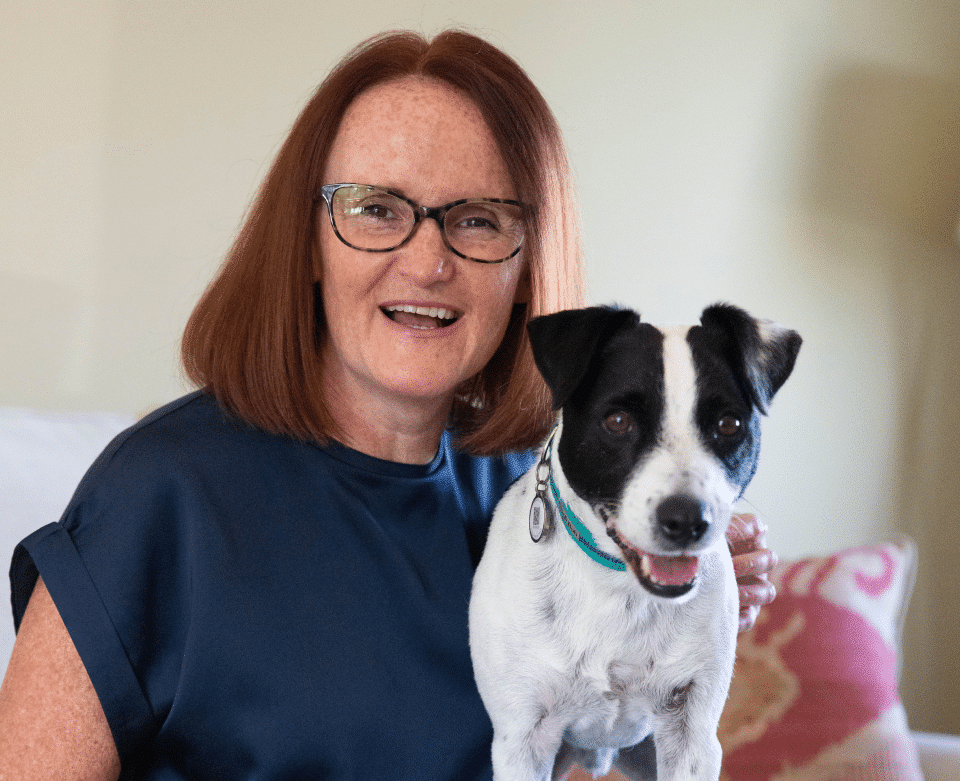


At the weekend I spoke at The Dog Trainer School Forum in Peterborough, to a room full of dog trainers and walkers who are some of the friendliest, most supportive people you could hope to meet.
I came home with pages of scribbled notes on hotel notepaper, a new bed on order for Patch (more on that later) and a head full of ideas, so I wanted to share 11 of the things I learned on the day.
Some came from the brilliant speakers I shared the stage with, and a couple came from standing up at the front myself.
1. Share the thing you feel nervous about
I always get nervous before I give a talk. So one of the first things I did was ask the room how they were feeling.
I asked people to put their hand up if they’d ever looked around a room and thought everybody else has got it all together and they haven’t, and then to put their hand up if they were feeling a bit nervous.
I did it partly for me, but mostly to bring the elephant into the room, because so many of us feel like this and we rarely say it.
I did wonder whether calling it out at the start was the right thing to do, and I’m so glad I did. Since sharing my carousel from the day, a lot of the comments and messages I’ve had have been about imposter syndrome.
When you say something like that out loud and people relate to it, they feel heard and understood.
They realise they’re in a room with other people who feel the same, and that means they can relax and enjoy the day.
2. You don’t have to dodge the tricky topics
Dr Holly Norman’s talk was all about puppies, and she started by saying that having a puppy can be harder than having a baby.
What I loved was her no-nonsense advice on giving puppies the best start in life, from getting through the teenage phase to the topics that can be tricky to talk about, like vaccinations, parasite prevention and food.
She tackled all of it in a brilliant, no-fluff way, and it was a good reminder that you can tell it as it is. Your clients want that clarity from you, even on the subjects you worry might get you judged.

3. Everyone cringes at talking to camera
Jennifer Somers talked about social media, and the line that stuck with me was that everyone cringes when they make videos talking to camera, but if you do it, that’s where the connection comes from.
She talked about showing the person behind the business, by getting on camera, sharing tips and letting your personality come through.
People want to know who you are, how you can help and what you stand for, and that’s very hard to get across from behind a stock photo.

4. The questions you get asked are your next video
If you don’t know where to start with video, Jennifer had a lovely simple idea.
Answer the questions you get asked all the time, starting with something like “I’ve been asked… and this is what I think.” You already know the answers, so it’s a great way to build your confidence on camera.
She also suggested aiming for two or three posts a week, putting keywords in your captions, and balancing relevant trends, human moments and your service offers, so your feed isn’t all one thing.
5. Learning sinks in when you rest afterwards
Dr Lauren Davis, The Sleep Vet, was fascinating.
Dogs sleep in several blocks across the day and night rather than in one long stretch, and the average dog needs around 12 hours of sleep a day, with puppies and older dogs needing nearer 18.
The bit I found most useful was that sleep is when learning sinks in.
So after a training session, follow it with rest, a calm activity, a lead walk or a nap, rather than repeating the same thing over and over.
Her simple formula was learn, play, settle and sleep, and space it out. That goes for us too, so I’m taking it as permission for a nana nap.

6. Do the fist test on your dog’s bed
Lauren talked about what good sleep looks like, including resting somewhere safe and dark, not being woken by pain, discomfort or us, and having a bed with a non-slip base that’s easy to get in and out of.
One of her tips was to put your fist on your dog’s bed to check how comfy it is.
So when I got home, I did the fist test on Patch’s bed, and realised the reason he probably doesn’t sleep in his crate anymore is that his bed isn’t very comfy.
I’ve ordered him a new OrthoLuxe mattress for his crate from Lauren, and I can’t wait for it to arrive.

7. Being listened to is a gift
Dr Katie Ford, a vet and coach, talked about using a coaching approach when you communicate with your clients, and so much of it chimed with my own coaching training.
She reminded us that clients are the experts in their own lives, and the clients who followed the plan were the ones who felt heard, not judged.
Being listened to is a gift, and something we rarely get. When we give that to our clients, they’re more likely to find the answers themselves and do their homework.
She also had a lovely question to ask when you’re not sure what someone needs: “Do you want me to help you find solutions, or is listening enough for today?”

8. It’s the middle bit that scares us
Another line from Katie that I wrote down and underlined was that most people do want the outcome, it’s the middle bit that scares them.
She shared an if… then approach for planning ahead, where you think about what might get in the way and decide in advance what you’ll do.
If I’m tired and haven’t got the energy for the big task, then an easier option would be… It takes the worry out of the middle bit, and I’m already bringing it into my planning days.
9. Getting from 100 percent to 90 percent is progress
Lee Hobbs from The Dog Trainer School shared his one-minute walk, which is so simple.
You let the dog pull for a minute, then stop and rest for a minute, rewarding connection, then let them pull for another minute, then rest again.
His point was that rest is where the magic happens, because it gives the dog a breather, gives the client’s brain and body a break, and gives you time to coach.
The line I loved was that if your dog pulls 100 percent of the time, getting to 90 percent is progress. He also reminded us that the perfect dog doesn’t exist.
I think that applies to so much more than lead walking, because small brave steps still count, even when they don’t feel like much.

10. Spell it out, and say what you want more of
Helen Wainwright from The Dog Trainer School finished the day with website essentials. Your website needs to make it clear where you are, what you do and how people can contact you, and it should list each service and what it helps with.
Two things stood out for me. First, use your website to highlight the work you want to do more of, rather than giving everything equal space.
And second, when you spell everything out about how you work, it’s much easier to stick to your boundaries. I came away with my own little to-do list from her talk, which I’m working my way through.

11. The voice in your head is always going to be there
While I was up there talking, part of my brain was saying “oh my God, everyone thinks I’m boring, this is rubbish”, and that voice popped up on and off throughout the day.
It’s only when you step away, and the lovely feedback and messages start coming in, that you think, I was alright after all.
I know that might sound a bit mad, but I suspect a lot of you will recognise it. We can be so mean to ourselves.
The message I wanted to leave everyone with was that if there’s something you really want to do, share it with a supportive friend.
The TDTS community is that kind of space, full of cheerleaders who’ll be right by your side when you do brave things, and it’s always such a buzz being in a room with people who are so passionate about what they do and who get what it’s like to work for yourself.

Thank you to The Dog Training School and their community
A huge thank you to Helen and Lee for having me, to Holly, Jennifer, Lauren and Katie for such brilliant talks, and to everyone who came and said hello.
You can find out more about The Dog Trainer School here: https://thedogtrainerschool.co.uk/
Related posts
Should you buy my pet business content planner
Why community matters for you and your pet business
Helen Wainwright from The Dog Trainer School on their Recommended Product scheme