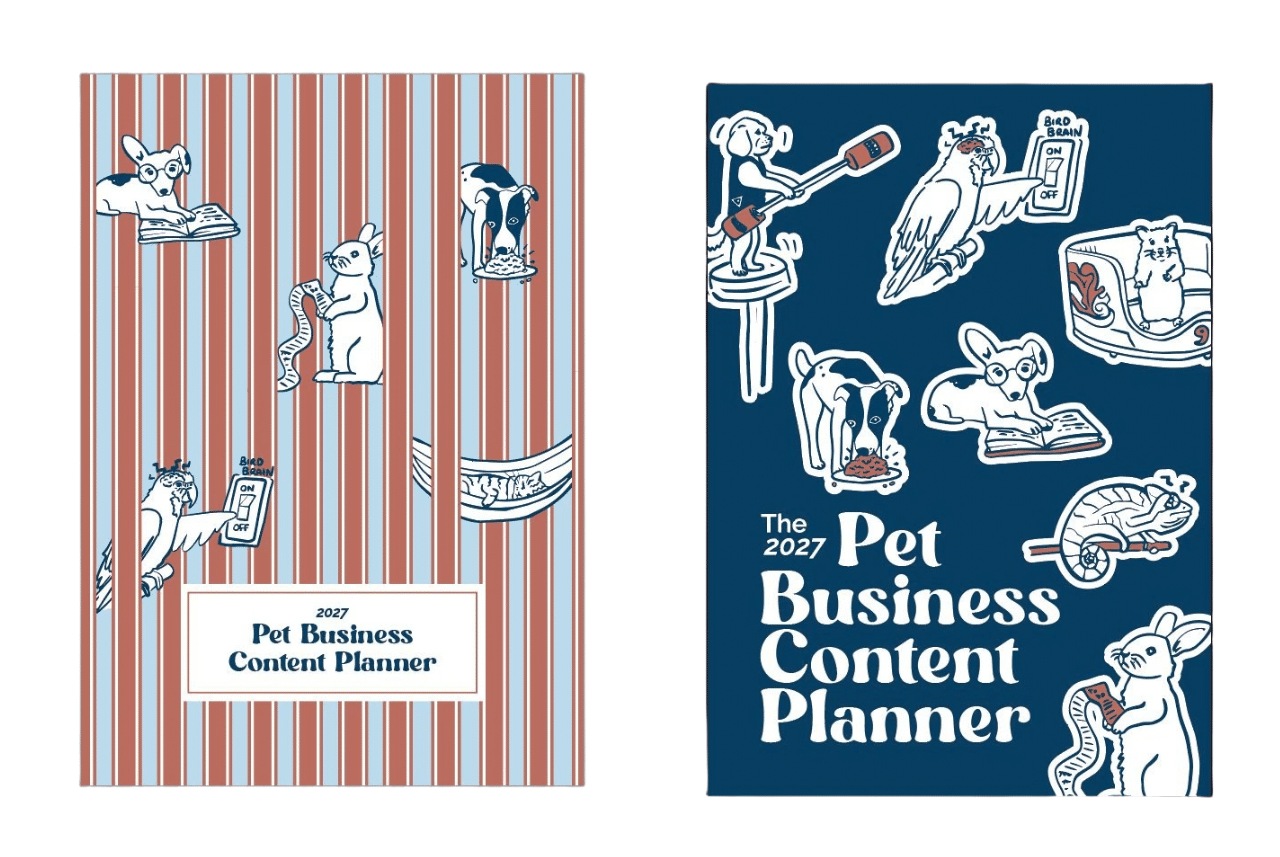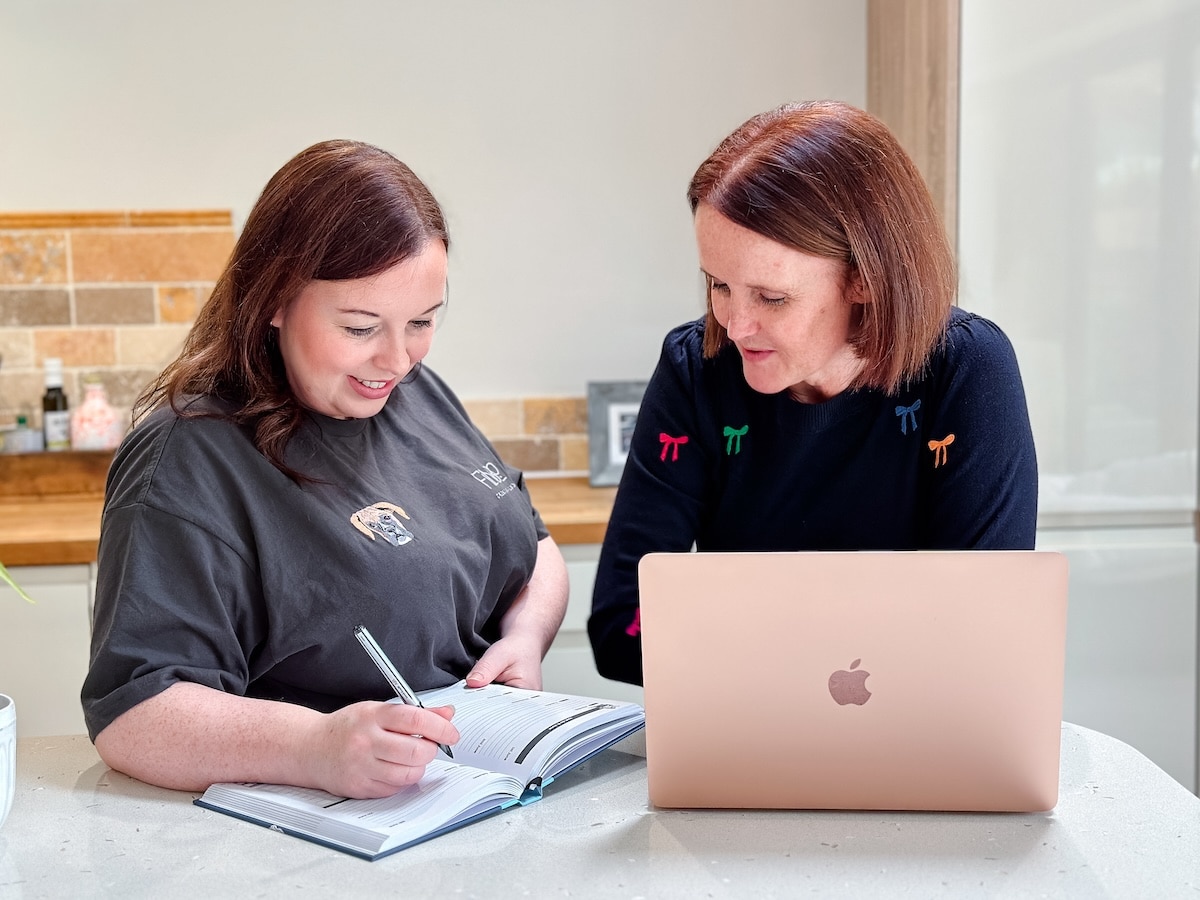


Would you love to become the kind of person who plans?
Are you fed up of feeling like you have so much going on that you can’t keep up, and like the idea of a more calm way of working?
The good news is that you don’t need to have a complete personality overhaul to become more organised.
It’s something you can build on one step at a time.
In this podcast episode you’ll learn why planning is helpful along with some stats to support the impact it has on your performance.
Plus pet business examples on ways they plan to support their work and feel less overwhelmed.
Listen in on the player link below or you can read the key points covered as a blog post.
Why being a planner isn’t something you’re born with
If you’ve ever bought a planner with the best of intentions, used it for a week (maybe two), and then abandoned it… you’re not alone.
So many pet business owners tell me:
“I’m just not a planner.”
“I start out being really good, but I can’t stay consistent.”
“I know what I should be doing, but then things get busy or stuff happens and I lose the momentum.”
“I start planning and putting myself out there then I see stuff online telling me I’m doing it wrong and that makes me question myself and lost confidence.”
Planning isn’t a personality trait.
It’s a habit. Like brushing your teeth.
You can become someone who plans, like you already are someone who brushes their teeth.
And like anything else, it’s about setting up the right environment for you to do the thing.
Planning is about who you’re becoming, not how organised you are
One of my favourite quotes from Atomic Habits by James Clear is this: “Each time you tick a box, you’re casting a vote for the kind of person you want to be.”
That sentence alone explains why planners, trackers and writing things down work so well.
You’re not just planning your week.
You’re reinforcing the belief: “I’m the kind of person who puts my business out there because the work I do matters.”
I see this all the time with clients and planner users.
Someone will say:
“It was easy to do three social media posts a week when I used the planner.”
Not because they suddenly became more disciplined but because having structure made the behaviour easier and this then started shaping how they saw themselves.
I’ll link to a full podcast with more on this at the bottom of this post, which breaks down how to create habits as a pet pro with insights from James Clear and Charles Duhrigg, both experts on habits.

Why habit tracking works (and why it’s not just a ‘nice idea’)
Research shows that tracking your progress can double your chances of sticking to a habit.
When you record what you’ve done, you get a visual reminder of effort, progress, and achievement – all things that make you more likely to repeat the behaviour.
A large meta-analysis published by the American Psychological Association looked at 138 studies and found that:
“Monitoring goal progress is a crucial process that comes into play between setting and attaining a goal, ensuring that the goals are translated into action,” said lead author Benjamin Harkin, PhD, of the University of Sheffield.
If you don’t track it, it’s much harder to sustain it.
According to Self-Determination Theory, ticking things off increases motivation because it supports:
- Autonomy – you’re choosing to show up
- Competence – you can see that you’re doing it
- Relatedness – you feel connected to the version of yourself you want to be
This is why even a simple tick can feel satisfying.
Writing things down changes how your brain commits
Writing down your goals makes you 42% more likely to achieve them, according to research by Dr Gail Matthews at Dominican University.
They found that people who wrote down their goals – especially if they shared them – were significantly more likely to follow through.
There’s also something called the generation effect.
We remember things better when we actively write or create them ourselves, rather than just thinking about them.
So when you write:
- your goals
- your content ideas
- what worked this month
- what you’re proud of
You’re not just putting down pieces of information.
You’re making your commitment to do those things stronger.
And you’re building your confidence and belief because you’re seeing how you growth.
Creating the right environment to plan
This is where you ensure your environment sets you up for success and takes away any obstacles that might stop you.
This is part of habit forming, so for you it might be going to a coffee shop on the last Friday of every month to do your overall plan for the month ahead.
It could be that you do your writing on a coworking call. I run four of these each month in my membership and coworking mornings as part of the planner club.
Think about where it is easy for you to do the thing you want to do and take yourself there.
For example, I used to go away to an AirBNB when I lived with Tommy if I had a coaching assignment or a big work thing because I needed to get away from distractions and other commitments.
Gamification and how this supports planning
Ticking boxes.
Tracking streaks.
Seeing progress build over time.
This kind of light gamification has been shown to increase consistency by up to 48%, according to research published in the International Journal of Human-Computer Studies.
A 2020 study in JMIR Serious Games found that people were significantly more likely to stick with habits when progress was visible and rewarded – even in small ways.
It’s why platforms like Peloton and Strava work so well.
Not because people are more motivated – but because the system supports momentum.
A paper planner does the same thing, without notifications, algorithms or pressure.
Why monthly planning works better than all or nothing
Another important piece of the puzzle is the timeframe.
Behavioural research shows that shorter-term goals feel more achievable, which makes people more likely to take action. Monthly goals work brilliantly because they don’t feel overwhelming.
There’s also something called the Fresh Start Effect – we’re more motivated at the start of a new week, month or year.
That’s why planning monthly and quarterly check-ins works so well.
You’re giving yourself natural reset points, instead of carrying guilt or unfinished plans forward forever.
5 simple ways to start becoming the kind of person who plans
You don’t need to overhaul your whole routine.
Here are a few ways to start and make it stick.
1. Give yourself a weekly planning window
Choose one time a week to open your planner and check in.
Sunday night? Monday morning? Pick what suits you.
Reflect on the week just gone.
What’s coming up?
What needs attention?
What can be paused or simplified?
You’ll go into the new week feeling focused, rather than frazzled.
2. Use a habit tracker to build momentum
Start by tracking one thing – whether it’s a social media post, time outside, or financial admin.
The act of ticking a box helps you build consistency and self belief.
Each tick reminds you: ‘I’m someone who does what they say they will do.’
3. Capture wins, not just to-dos
If you only track what you haven’t done, planning can feel like a stick, not a carrot.
Instead, write down the things you’re proud of – small wins, nice messages, bookings, or reviews.
These moments build your confidence to keep going.
4. Take time to reflect
Each month, look back and note what worked (and what didn’t).
This builds resilience, helps you see what you’ve achieved and areas where you’re improving and helps you make better decisions.
It’s also how you stop dragging things forward that aren’t suited to you anymore.
5. Let it be imperfect
If you’ve missed a week or a whole month it doesn’t matter.
We all get busy and your planner is a tool to support you, not a stick to beat yourself with.
Links mentioned in this episode:
James Clear – Atomic Habits
Studio44Pilates Habit Tracker: https://mailchi.mp/f755bf536962/mymonthonthemat
Kerry Whitney from Frankys Bowtique fitness progress page: https://www.instagram.com/kerry_9whitney
Mel Robbins podcast: https://www.melrobbins.com/episode/episode-358/
Related posts:
How to create habits as a pet professional
The importance of looking back to see how far you’ve come
Is my Pets Get Visible membership right for you?
What is The Planner Club and should you join