

Have you set yourself a big and exciting goal for 2027, like learning something new or writing a book, and you’re looking for some inspiration?
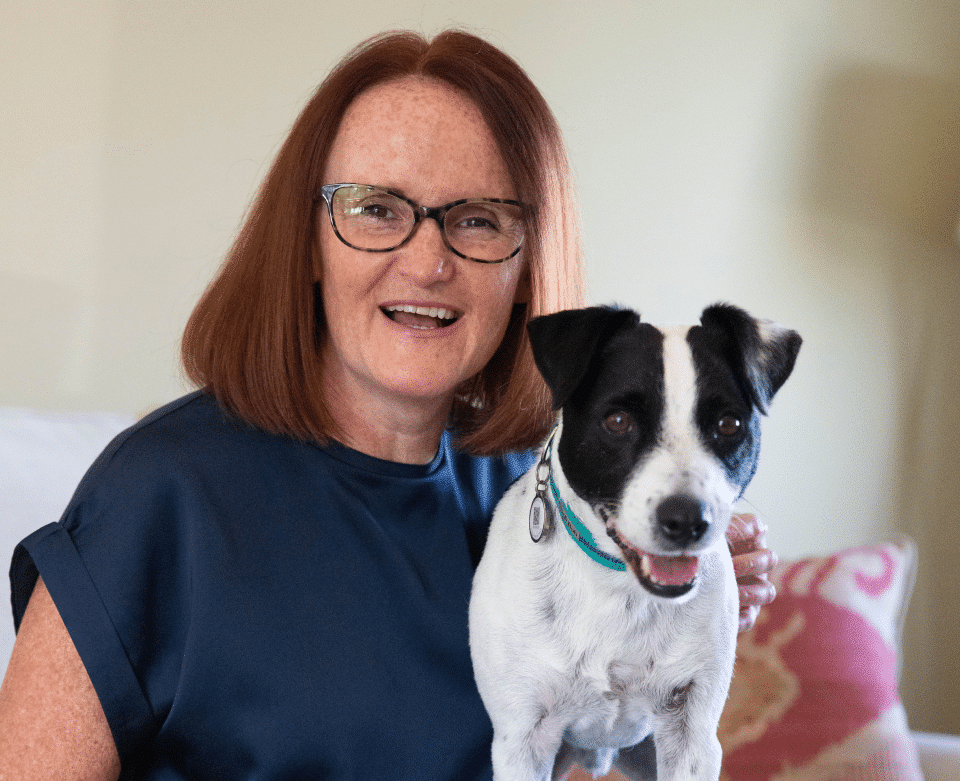
If so, you’ll love this interview with Jules Ballard, dog behaviourist and author of Holistic Help For Your Anxious Dog.
This time last year, Jules made the big decision to put pen to paper and bring together everything she knows about dogs and holistic healing.
What started as an idea for a PDF for her clients turned into a 428-page book, complete with images and illustrations, all made by Jules, so quite the tome!
In this interview, Jules shares how she did it, what kept her motivated, and her advice for any pet pros thinking of taking on a big challenge in 2027.
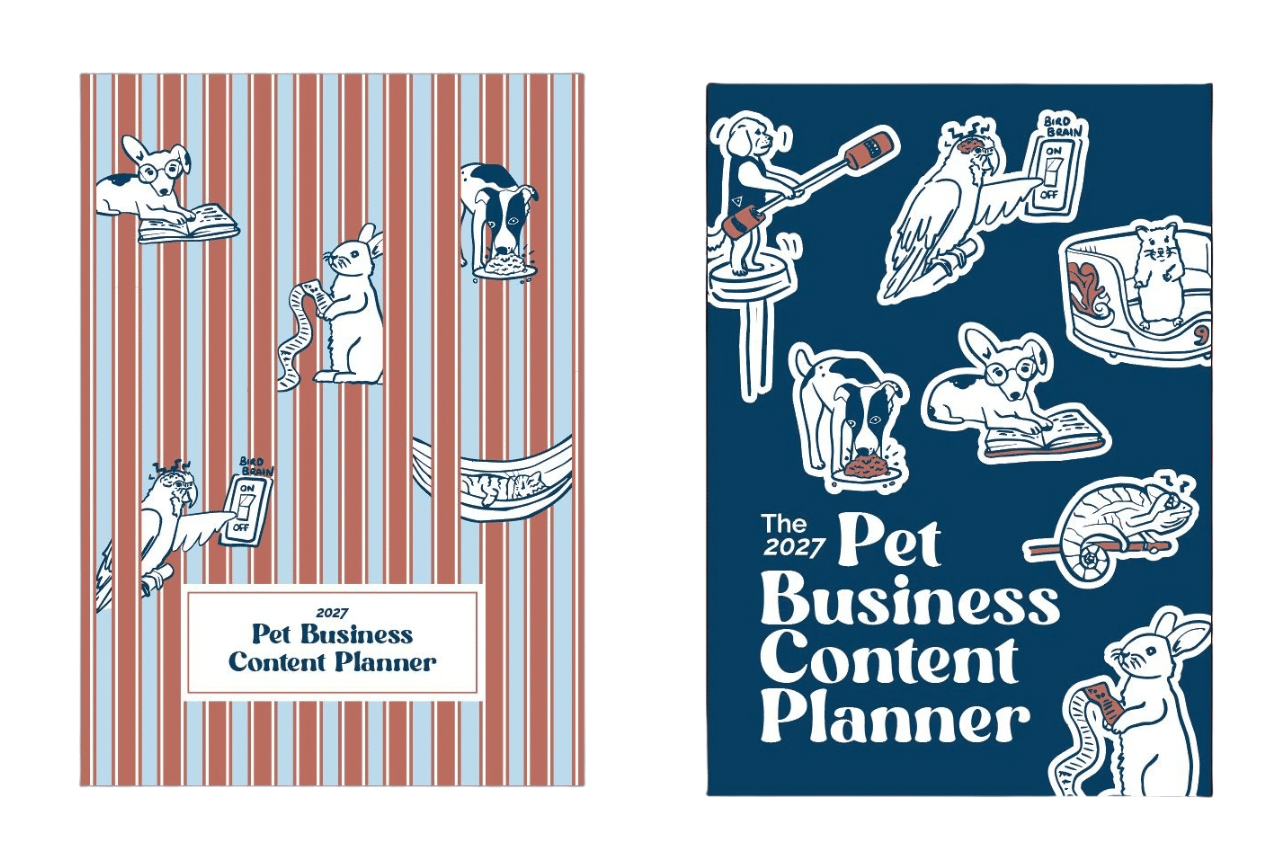
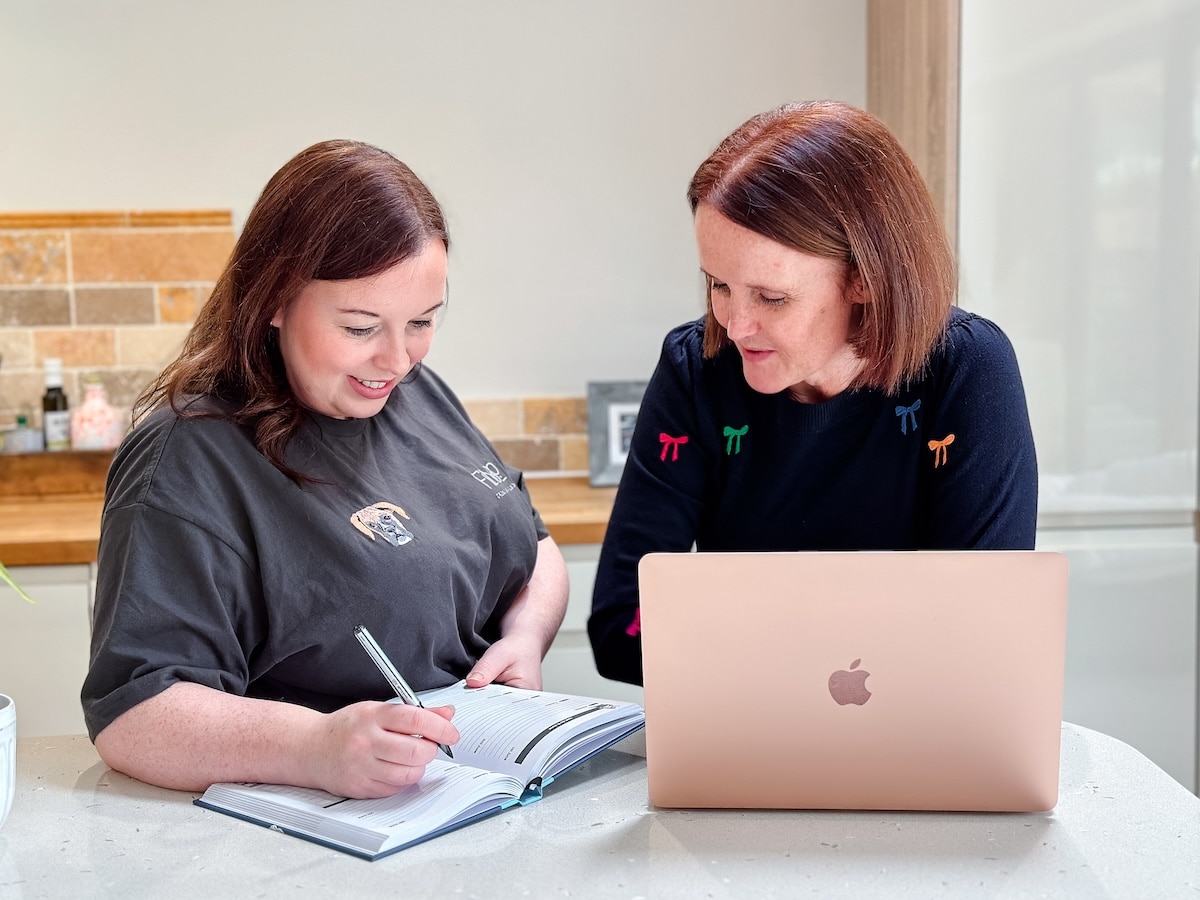
Jules also mentions my membership, The Planner Club, and if you’d like to find out more about that, head here.

When did you first have the idea to write the book?
“Like all things, I think the idea was brewing for some time before I formalised it.
“I remember attending a planning meeting in November 2024 and stating my goal of writing a blog every two weeks.
“Mentioning that on a live call gave me the accountability to do it consistently, and the content planner gave me ideas for themes.
“Sometime in the early summer, I realised how much I was enjoying writing longer pieces and the idea started to grow. ‘I wonder if I could write a book?’
“Of course, the old imposter syndrome kicked in and caused me to put a freeze on everything, plus I didn’t know what to write about.
“I was still working with both human and companion animal clients, and I realised that almost everyone contacting me, whether they were seeking help for themselves or their dog, was experiencing some form of anxiety.
“For the last two years, I had been using all my holistic tools, including essential oils, herbs, Traditional Chinese Medicine (TCM), Emotional Freedom Technique, ACE Free Work and other traditional behavioural techniques, to put together behavioural support plans. “
Can you tell me about the topic of the book and who it’s for?
“The title just came to me: Holistic Help For Your Anxious Dog.
“I thought that by writing a book, I would reach more guardians who might not have the money to consult a behaviourist, or might not have the courage to reach out.
“I love teaching and presenting webinars, and I thought it might help other trainers and behaviourists as well as owners.”
What was it like getting started?
“I made a pact with myself that I would make a serious attempt to write a ‘short’ book to help clients who had an anxious dog.
“I didn’t tell a soul about what I was doing, not even my mum, and I think this was a protective measure. I’m extremely lucky to be surrounded by several people who have faith in me, and I didn’t want to say my idea out loud, because that would make it too real. I also didn’t want to let them down if I failed.
“I’ve always been quite in awe of authors, and I was questioning my ability before I even started. But once I made the decision to start in September 2025, there was no stopping me.
“I told myself I was writing the type of book I would like to read, and even if no one read it, it wouldn’t matter because I would have achieved my goal.
“I had a rough plan to break it down into five sections, and I took some material from a stand-alone course I’d written several years ago called Achieving Balance for You and Your Animal.
“I knew I wanted a human section, as so much of what we do is mirrored in our animals and vice versa, and it had to have a holistic focus.
“I didn’t have a clue about how to publish, so I googled it. I didn’t do any courses on book writing. In fact, I didn’t even consider it, because I didn’t want to feel constrained by a particular formula.
“I just wanted to write something from the heart that reflected my own experience, knowledge and passion.
“I know what it’s like to have an anxious dog. I adopted an ex-police dog in 2016, and she was the reason I studied to become a behaviourist.
“I’ve also worked for over 20 years with humans with anxiety, birth trauma and other types of PTSD, so writing a book felt like a natural way to bring all my experience together and share it.”
Were there moments where you questioned your decision or whether you would finish?
“I think a better question would be, ‘Was there ever a moment when I didn’t question my decision?’ Every day I was thinking, ‘What have I done?’ Especially as my idea of a short book rapidly turned into quite a tome!
“From the day I started, I spent around 40 hours a week, every week, researching, writing, rewriting and coming up with yet another thing that absolutely had to be included.
“I kept to the five sections of my original plan, which were a theory part, a botanical part, an energy part, a practical part and a human part, but it just kept growing.
“I never thought I wouldn’t finish, as I’m quite driven once I decide to do something. I finished the writing two months ahead of the June 2026 goal I’d set myself.
“What I didn’t account for was the proofreading and formatting. I’d been proofreading each chapter as I went along, and so had my mum, but I still needed four more proofreads of the whole 99,000 words.
“It’s disheartening when you find yet another typo or extra space that you missed before, but that paled into insignificance when it came to the formatting.”
Was that the biggest challenge?
“Yes! It’s really difficult to see things when you’re reading on a computer screen, and until you get a proof copy, you don’t know if the format is right.
“It took me four proof copies to get it right, and each time I changed the margins or print size, I had to redo all the indexing. That was frustrating and demoralising when you’re so close to the end.
“I was trying so hard to get the book right in a standard 6 x 9 size, and it just wasn’t working. Then a friend suggested I do it as a 7 x 10.
“That was a turning point. Of course, I had to redo all the indexing and margins again, but the end was finally in sight.
“I remember how much I enjoyed the week off from doing anything at all on the book while I waited for the proof copy to arrive.”
What was it like when you shared your plan publicly on the call that day with me, Kerry and Hayley?
“Normally on the membership coaching calls, there are lots of people and I just sit there quietly and listen. But on that day, there were only four of us.
“I hadn’t planned to share that I was writing a book at all, but it just felt right. Up until that point, I think it was still a bit of an experiment.
“I wasn’t even sure I was going to get it published. I thought I might just make it a PDF I could email to clients.
“I didn’t really know Kerry and I’d never seen Hayley before, but it felt like an intimate setting, and when there was a pause, I thought, ‘Well, why not?’
“The support, kindness and encouragement I got from everyone was incredible and really helped to motivate me.
“From that point, I don’t think I questioned whether I would publish. Saying it out loud to two strangers and a friend meant I was committed to finishing.”

What helped when it came to keeping going with the writing?
“I’m very organised, and right from the start I made Friday to Monday my writing days and Tuesday to Thursday my working days.
“I’d never realised before that I could be so focused and single-minded when it came to leisure activities.
“When I was working as a midwife, I was awful at keeping a work-life balance, but I loved my job so it didn’t feel like work, and I think the writing was the same. I was enjoying it so much that it was easy to keep going.
“I’ve since reflected on that time and realised it would have been OK to move my deadline back, take longer to write the book and pace myself.
“I always talk to clients about the importance of having balance in both their lives and their dogs’ lives, and here I was doing the complete opposite.
“It was a useful reminder that even those of us who spend our time encouraging others to find balance occasionally need to take our own advice!
“Luckily, I did most of my writing over the autumn and winter, so there wasn’t the same pull to get out in the garden.”
Did you have a goal when it came to the book?
“I didn’t think anyone would buy it, so I set myself the target of being pleased if five people bought it and ecstatic if ten did!
“I’ve gone past that, and I’m so grateful to everyone who has bought it. I know some people who don’t even have a dog have bought it because they wanted to support me, which was lovely. I’ve also had some wonderful five-star reviews.
“Although I set myself such modest expectations, I think the greatest reward has been hearing how much people have enjoyed the book, and knowing the information might make a difference to someone and their dog.”
How did you feel when you published it and held it in your hands for the first time?
“This is a really difficult question to answer, as I went through so many emotions.
“I think the first was utter disbelief. Seeing your name on an actual hard copy is quite overwhelming, but that quickly gets replaced by sheer joy. I think the photo of me holding the book shows that.
“About two weeks after it was published, I realised I was no longer talking about ‘the’ book. I was saying ‘my’ book.
“That was another turning point for my self-confidence. I’ve always questioned myself and my abilities, and seeing myself in print has lessened that a tiny bit!”
What would you say to anyone who has a big goal or dream like you did and is thinking, ‘Can I do this?’
“I would encourage anyone to pursue their dreams or goals. We don’t realise what we’re capable of until we try.
“Don’t wait until you feel completely confident, or until you think you know everything you need to know.
“Sometimes you just have to take that first step and learn as you go. If you’d told me a year ago that I would be a published author, I wouldn’t have believed you.
“I’d encourage them to make a rough plan of what they want to achieve and how they’re going to achieve it, making sure they build in lots of breaks and leisure activities. It really helps to have a written plan you can scribble on.
“Being part of a supportive membership also helps, so I would definitely recommend joining The Planner Club!
“I’d also love to help anyone who’s thinking of writing a book with the formatting, to hopefully save them the headache I had.”
Find out more about Jules
Head to her website: https://www.contented-canines.com/
Buy her book on Amazon: https://link.amazon/B06FZn3ez
Follow her on Facebook: https://www.facebook.com/groups/contentedcanines
Connect on Instagram: https://www.instagram.com/jules.ballard3/
Related posts
Should you join The Planner Club?
Building habits in your pet business you can stick to
Should you buy the Pet Business Content Planner?
How online coworking can help you get stuff done
Setting goals in your pet business to match your skills, strengths and energy
Why we set goals and forget them and how to get back on track
I never thought writing a book in 30 days would lead to a new business