

Do you set goals for yourself at the beginning of the year, then forget all about them?
One of my clients, Sarah Hawkins from Barkshire Dog Training, gave me a nudge the other day about my goal for more connection.
I made this my word of the year for 2026, and I’d shared it publicly too, on a podcast episode about why Connection was the word I’d chosen.
She asked me how I was getting on with it, and I was able to say I’d been pretty good, but thanks for the reminder, because I could be better.
Then I went and arranged a few more get-togethers with my friends, and booked an in-person work event I’d been meaning to for a while, because she reminded me of my goal.
Sharing a goal publicly means you have that accountability, but there’s also nowhere to hide.
If you don’t follow through, that can bring up shame, because people know what you said you’d do.
You’re more likely to do the thing if you tell someone
Dr Gail Matthews, a psychology professor at Dominican University of California, ran a study specifically to test how goal achievement is shaped by writing goals down, committing to actions, and being accountable to someone else for them.
She split 149 participants into five groups, each one adding a bit more structure than the last.
Group one just thought about their goal, the second group two wrote it down, and the third group wrote it down and added specific action commitments.
The fourth group did all of that and sent their goals and commitments to a supportive friend and group five went a step further again, sending that same friend weekly progress reports.
Four weeks later, when everyone rated how much they’d achieved, the results climbed in a clear staircase alongside the amount of accountability each group had built in.
The group who’d only thought about their goal scored lowest, at 4.28.
Simply writing the goal down lifted that to 6.08.
Sending action commitments to a friend took it further, to 6.41.
The group that sent that same friend weekly progress reports scored highest of all at 7.6, significantly more than every other group in the study.
Matthews concluded that writing a goal down helps, and telling someone else about it, so there’s a witness to what you said you’d do, helps more.
And checking in on your progress with that person regularly helps most of all.
You can read the full study by Dr Gail Matthews here.
A 2025 study by psychologists Johanna Peetz, Roger Buehler and Tayler Wells, published in Personality and Social Psychology Bulletin, followed over a thousand people.
They found telling others about a personal goal led to more support, in the form of reminders, encouragement and practical help.
This support was linked to people putting in more effort and making more progress. Read a report on how sharing your goals makes you more likely to work on them here.
Why you lose sight of what you set out to do
You sit down, you think about what you want from the next three months, you write it down feeling clear and motivated.
Then, life happens, so clients, admin, a dog that needs walking, an inbox that never feels under control.
You might have kids, family challenges to deal with, and your goals and your needs can get pushed to one side by other people’s demands and priorities.
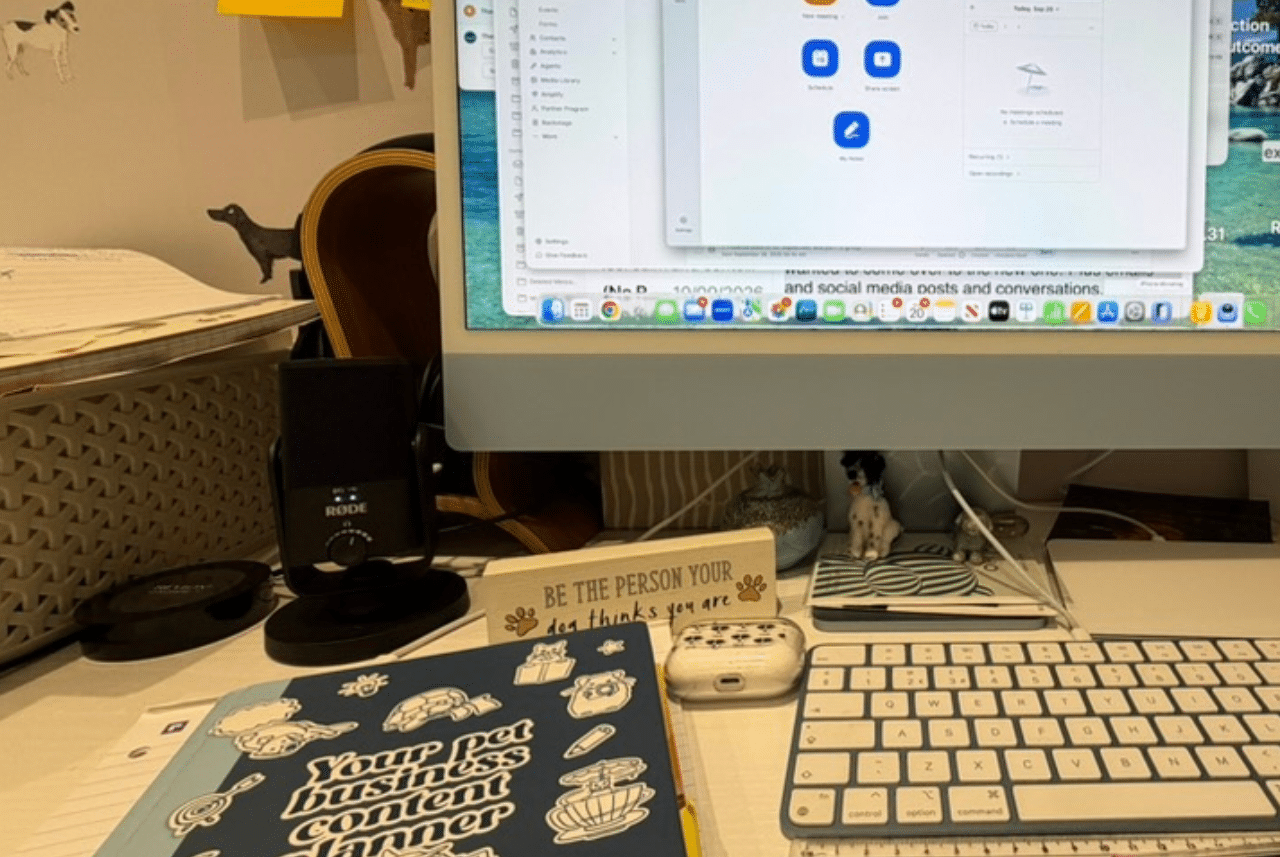
This is why the quarterly reflection sections are in my planner.
The idea is you look back at what you set out to do at the start of the quarter, and you read it again, rather than letting it sit unread in a drawer or a notes app you never reopen.

Why having a space to return to your goal works
The first is that we forget our own progress
Without something to look back at, you lose track of what you’ve done, and it’s easy to feel like you’re standing still even when you’re not.
Seeing it written down, in your own handwriting, from a few months ago, is proof.
In coaching sessions, I often reflect the exact words clients say, and they are surprised to hear these words said back to them, and realise how capable and brilliant they are.
The second is about resilience
Something that felt hard when you started, a difficult conversation, a new way of pricing, putting yourself on camera for the first time, often becomes easier without you noticing the shift happened.
Looking back and seeing that you did the hard thing, and it’s not hard any more, is a reminder that you can do hard things, and next time you have a challenge to overcome, you have this in your memory bank, and it can help you move forward.
The third is pacing
If you set ten goals for the quarter and managed three or four, that’s not because you’re a terrible person, it’s usually because you have maybe taken on too much, or it could be that life has happened and you’ve been derailed.
It tells you something about how much you can realistically take on, so next time you can plan with your capacity in mind.
You can also move a goal you’ve not yet tackled into the next quarter or a time when you’re in a better space to work on it.

Always someone there to remind you
What Sarah did for me is really what the quarterly reflection pages in the planner are trying to do for you, without needing to wait for a client, a friend, or a coach to ask at the right moment.
If a reminder from one person over a chat can be enough to give you a nudge, imagine what a proper, dedicated space to revisit your goals every three months can do.
That’s the thinking behind building review into the planner, and it’s part of why coming back to your goals in The Planner Club matters too.
Every quarter, we spend time looking backwards as well as forwards, on purpose, together, so nobody has to rely on a nudge from someone who happens to remember what you told them in January.
What this looks like in coaching
At the beginning of a coaching programme, we outline goals together.
Maybe you want an online course built and launched over the coming months, or you want to get focused on a membership or a podcast, or you’ve got several things happening at once and you want coaching as your way of staying accountable and supported through it.
Sometimes you come to coaching because you’re finding it impossible to think your own way out of a situation, and what you need is a thinking partner, someone to work it through with rather than someone to hand you an answer.
Working with a coach means having someone by your side who has witnessed the goals you shared right at the start, who’s there when you feel stuck, and who’s there to cheerlead you when you’ve done more than you’ve given yourself credit for.
The way I support people sits across three areas: Visibility, Evidence-led coaching, and increasingly, Emotions Coaching, which I’m currently training in with Jo and Zoe from In Good Company.
I recently used Emotions Coaching to support a client who was stuck, and now she’s flying through something she’d long dreamed of putting out into the world.
Where and why emotions come into it
The traditional coaching model focuses on Goals, Values, and Beliefs. What do you want, what matters to you, and what do you believe about yourself and what’s possible?
My Emotions Coaching Practitioner Training which I’m doing with In Good Company adds a fourth principle to that: Emotions.
Because there are emotions tangled up in our goals, and even if you think emotions have nothing to do with business, I have yet to meet anyone who isn’t impacted by their emotions in some way when it comes to work.
Here are some examples:
Guilt for not getting to something you told yourself you would.
Overwhelm from taking on more than was realistic in the first place.
Shame for saying you’d do something publicly and then not following through.
These are the things that often stop the goal from getting done, far more than a lack of a plan or a lack of skill.
Bringing emotions into the conversation alongside goals, values, and beliefs means we’re not just asking what happened and what’s next.
We’re asking what got in the way, what that felt like, and what you need so it doesn’t happen the same way next time.

How can I support you with this
Whether it’s through using the planner, which brings you back to your goals every quarter and prompts you to see how far you’ve come, through The Planner Club.
This is where we look backwards as well as forwards together, or through working with me as a coach, this is what I’m here to help with.
Not only setting goals, but sticking with the things you say you want to do, and understanding what’s going on when you don’t, so you can find your way forward.
If any of this resonates and you’d like to chat about working together, head here to share what you’re looking for from coaching and to arrange a call.
Buy your copy of the Pet Business Content Planner for just £30 plus P&P
Join The Planner Club from just £30 a month.
Further reading
The importance of looking back to see how far you’ve come
Creating habits in your pet business you can stick to
Should you buy my Pet Business Content Planner
Is The Planner Club right for you?
How Emotions Coaching can help your pet business
Could your emotions be blocking your visibilty plans?
Why I am an accredited pet business coach
Why connection is my word of the year for 2026
Creating a plan that matches your strengths, skills, energy, goals and values