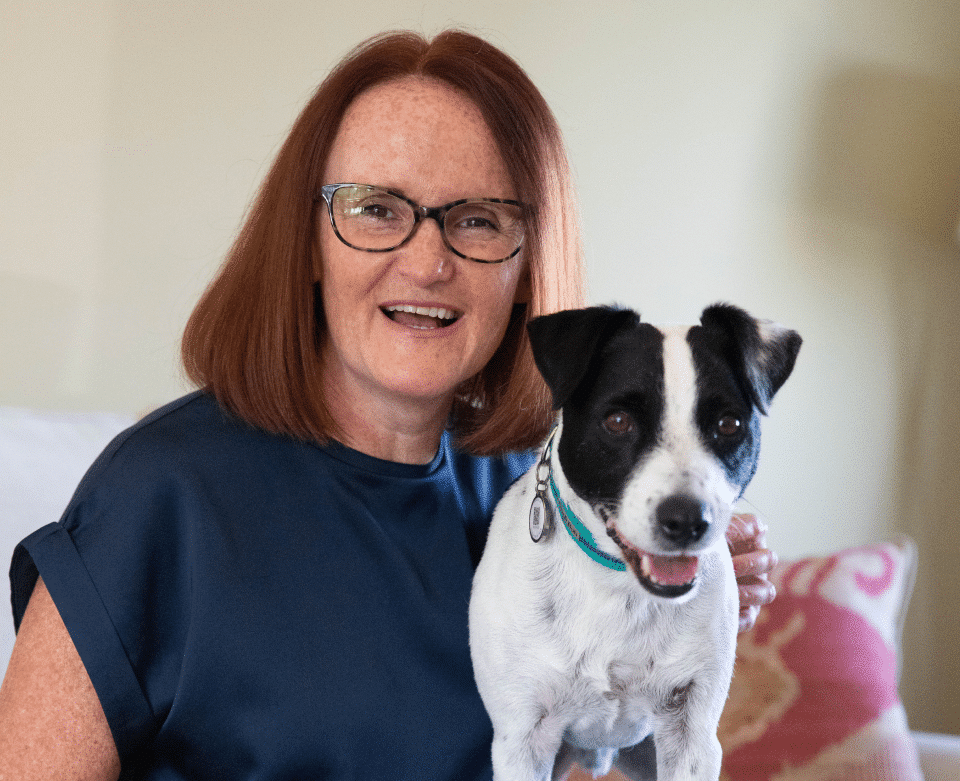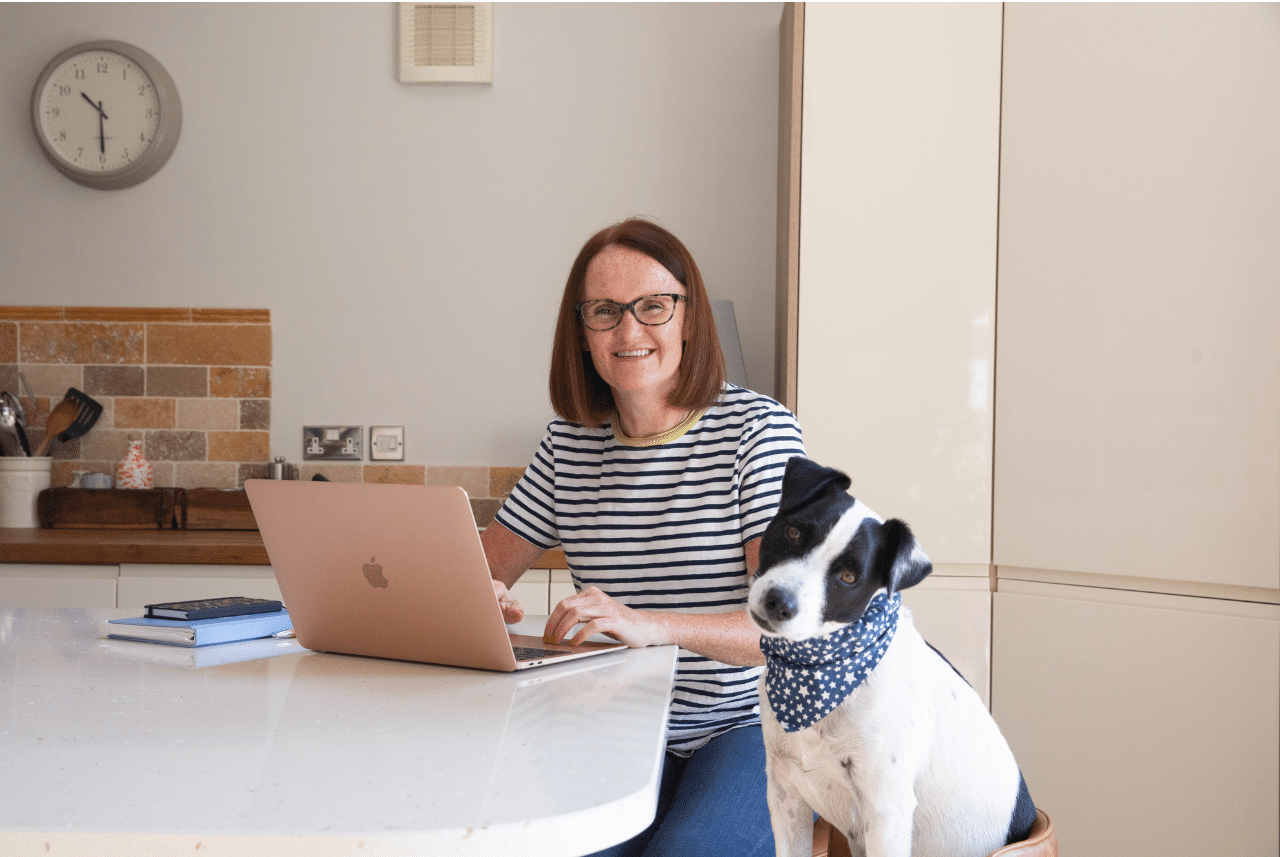


I run The Planner Club, a membership for pet business owners built around one simple idea: plan then do the work.
My background is journalism, and I’ve worked in newspapers and magazines since 1999, before training as a Pet Business Coach.
The Planner Club is something I created to help clients when it comes to planning and being visible, so they can work towards the goals they set and make sure people know who they are and what they do.
Every month we hold a planning and coworking morning, and every quarter we plan further ahead with a longer planning call.
I wanted to explain what these calls involve, because I think the word “planning” means different things to different people.
How strategy and planning work together
Do you set a strategy, or do you make a plan? Ask most business owners which one they’d rather say out loud, and I reckon strategy wins every time.
Strategy sounds impressive, doesn’t it. People go on strategy days, hire strategists, talk about their content strategy or their pricing strategy quite happily.
Planning sounds like homework, spreadsheets and admin, not the kind of thing you get as excited about as your strategy.
When you look at how they’re defined though, it’s similar.
A strategy is a decision about what matters and why.
A plan is what you’re going to do about it, and when.
You can have a brilliant strategy in your head, or written up somewhere fancy, and go nowhere with it, unless it’s turned it into a plan.
And you can have the most detailed plan going and still just be busy, because there was never a strategy worth planning for underneath it.
So really, you need both. You might have already worked on your strategy, and if it’s the planning you want to do next, then this is how things work in The Planner Club.
What happens on a monthly pet business planning call
We start by reflecting on the month that’s just finished, sharing in the chat what we’re celebrating and what’s worked, and celebrating doesn’t have to be about business.
On the latest call, people were sharing everything from new clients and a fully booked cottage to a first Google review after years of asking, a sister retiring, and a new puppy.
Then we look at what’s coming up over the next month, so anything seasonal that needs thought and planning.
For example, fireworks season if you work with anxious dogs, cold weather stock if you sell products, the run up to Christmas if you sell anything at all.
After that I ask some questions to help you focus, then I open up breakout rooms so you can chat with other pet business owners about the month ahead.
Saying what you’re doing out loud with other members helps you figure out anything that might get in the way, and gives you the accountability of others knowing what you’re looking to achieve.
Then we move into the coworking session, and everyone uses that time differently. Some people batch a whole month of social content in one sitting.
I can’t work that way, I’ll sketch out ideas rather than write everything at once, so I might write a blog post I want to publish the next day, or make a start on a first draft of a content plan.
There’s no right way to use it, only whatever gets you moving on the thing you just said you’d do.
What happens on the Quarterly pet business planning call
In the quarterly call, we look back at the last few months and celebrate everything that’s been achieved.
It’s often more than people give themselves credit for, books finished, courses launched, staff issues resolved, best quarters on record.
From there we get into the months ahead and where we’d like to be at the end of the coming quarter, what we’d love to have achieved.
Then it’s about thinking about the steps to put in place, the milestones to note along the way, any support you might need, so you have everything in place to make the thing you want to happen happen.
Why we forget the goals we set
Setting a goal is the easy part. The harder part is remembering it exists three months later, once the day to day of running a business has taken over.
This is why each quarterly session starts with looking back at the goals you set the previous session. Now there will be times where things didn’t work out.
There will be times where you exceeded all your expections with a goal, and there will be times where your goal fell off the priority list, and you might feel dreadful about it.
The sessions are about giving you the support you need to keep going, get back on track, or feel ok about letting go of something that felt really important at one stage, but doesn’t now.
Because we all set goals and forget about them, and it’s why having accountability helps.
Dr Gail Matthews, a psychology professor at Dominican University of California, ran a study to see how writing goals down, committing to specific actions, and being accountable to someone else changes whether people follow through.
She split 149 participants into five groups, each with a bit more structure than the last, from simply thinking about a goal through to sending a friend weekly progress reports on it.
Four weeks later, the results climbed in a clear staircase alongside how much accountability each group had built in.
The group who’d only thought about their goal scored 4.28 on how much they’d achieved.
Writing it down lifted that to 6.08. Sending action commitments to a friend took it to 6.41.
The group who sent that friend weekly progress reports scored highest of all, at 7.6.
A more recent study, published in 2025 by psychologists Johanna Peetz, Roger Buehler and Tayler Wells, followed over a thousand people and found much the same thing from a different angle.
Telling other people about a goal led to more support, in the form of reminders, encouragement and practical help, and that support was linked to people putting in more effort and making more progress.
So having witnesses to the goals you set makes a difference
It isn’t really about the plan itself, it’s about putting your goals out into the world, so they don’t fade the way goals tend to when nobody else knows about them or asks how they’re going.
There are a few reasons coming back to your own goals like this works so well.
The first is that we forget our own progress. Without something to look back at, it’s easy to feel like you’re standing still even when you’re not, and seeing what you wrote a few months ago is proof of how far you’ve come.
The second is resilience. Something that felt hard when you started, a difficult conversation, a new way of pricing, putting yourself on camera for the first time, often becomes easier without you noticing the shift happened. Looking back and seeing you did the hard thing, and it isn’t hard any more, is a reminder that you can do hard things again.
The third is pacing. If you set ten goals for the quarter and only managed three or four, that isn’t usually because you took your eye off the ball, it’s because you took on too much, or life happened and derailed you.
It tells you something useful about how much you can realistically take on, and it means a goal you haven’t got to yet can simply move into the next quarter rather than sit there as evidence you’ve failed.
How taking time to plan means you finish what you start
I read something recently about the Zeigarnik effect, named after a researcher called Bluma Zeigarnik, who found in the 1920s that our brains hold onto unfinished tasks far more than finished ones.
An open loop keeps nudging you, even when you’re trying to focus on something else, and it adds to your mental load right up until the task is closed, at which point you feel lighter.
That’s the productivity loop in a nutshell.
Have an idea, start it, finish it, celebrate it.
The celebrating bit is the one people skip, but it’s what makes the whole loop worth repeating, because you look back and think, well I did that, so I can do this next thing too.
If you skip it, and ideas just pile up half done in what I call the ideas graveyard, and instead of feeling motivated, you end up overwhelmed by everything you haven’t finished.
That’s really what these planning calls are for, a regular, focused pocket of time to look back at what you’ve finished, feel good about it, and let that feeling carry you into the next thing.
Why I used to avoid planning and what it cost me
For years I didn’t plan much of anything in my business. I told myself I worked better winging it, but the truth was if I planned something and then didn’t do it, I’d have to admit I’d failed at it.
Not planning meant I never had to look at that gap between what I said I’d do and what I did. It felt like it was protecting me.
All that happened was I still didn’t do the things I wanted to do, I just didn’t have a plan sitting there reminding me of it.
I felt just as rubbish about it, if not more, because underneath the not-planning was still the same ‘ideas graveyard,’ and I’d see other people doing the things I’d dreamed of doing and beat myself up even more.
Now I make time to set goals and plan properly, and this means I get stuff done.
Fancy working on your pet business planning together?
If this sounds like the kind of structure you’d find helpful, The Planner Club runs planning and coworking mornings every month, quarterly planning calls, and the full day planning event in November, all built around this same idea.
Find out more here: https://rachelspencer.co.uk/the-planner-club/
Related posts
Should you join The Planner Club
Should you buy the Pet Business Content Planner
Why we forget the goals we set
Three steps to creating an effective content strategy